What is an Altcoin? A 2026 Guide for Australians
What counts as an altcoin, how altcoins differ from Bitcoin, coins versus tokens, the main categories and risks, and the Australian tax and regulatory context. Education only — not financial advice.
Quick Answer
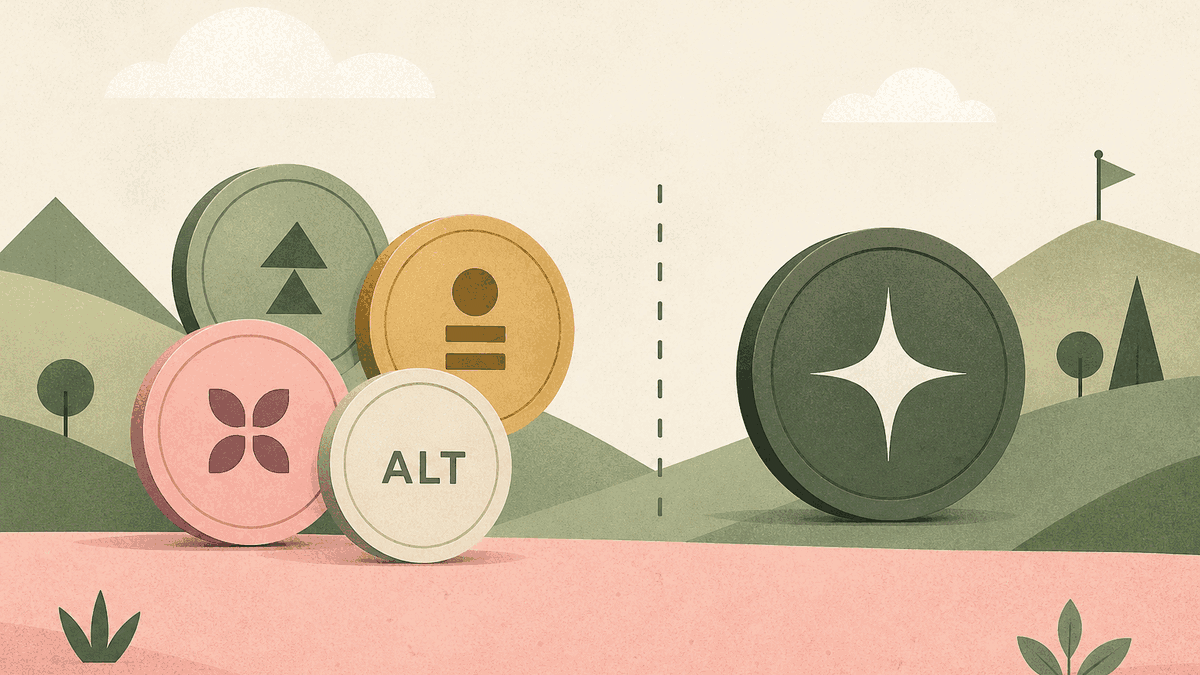
An altcoin is any cryptocurrency other than Bitcoin — the word is short for 'alternative coin'. Bitcoin was the original crypto; everything since, from Ethereum to thousands of small tokens, is an altcoin. Coins usually run on their own blockchain, while tokens are issued on top of another chain. Main types include smart-contract platforms, stablecoins, meme coins and DeFi tokens, and risks run from volatility and thin liquidity to project failure and scams. In Australia, AUSTRAC registration for virtual asset service providers is an AML obligation, not an AFSL, and the ATO generally treats crypto as a CGT asset. Education only.
Altcoins in one screen
Any crypto except Bitcoin
Definition
Own blockchain
Coins
Built on another chain
Tokens
AUSTRAC VASP + ATO CGT
AU angle
TL;DR - Quick Takeaways
- An altcoin is any cryptocurrency other than Bitcoin
- Bitcoin was the original crypto; every coin and token that followed is an altcoin
- Coins usually run on their own blockchain; tokens are issued on top of another chain
- Main categories include smart-contract platforms, stablecoins, meme coins and DeFi or infrastructure tokens
- Altcoins carry extra risks: volatility, thin liquidity, project failure and scams
- In Australia, AUSTRAC registration for virtual asset service providers is an AML obligation, not an AFSL; the ATO generally treats crypto as a CGT asset
- Education only — not financial, tax or legal advice
Table of Contents
What is an altcoin?
An altcoin is any cryptocurrency other than Bitcoin. The name is short for "alternative coin", and it stuck because Bitcoin was the first cryptocurrency — everything that launched after it was, by definition, an alternative.
That makes "altcoin" a very wide umbrella. It covers large networks with their own developer communities, stablecoins designed to hold a steady value, joke tokens with no roadmap, and everything in between. The label tells you what a coin is not; it says nothing about quality. Our XRP explainer looks at one large altcoin built around payments.
Because the category is so broad, the useful questions are never "is this an altcoin?" but "what does it do, who maintains it, and how liquid is it?" The rest of this guide builds that frame.
Altcoin vs Bitcoin
Bitcoin keeps a deliberately narrow job: a settlement network with a fixed supply schedule and conservative, slow-moving changes. Altcoins exist because builders wanted to try everything Bitcoin chose not to — faster blocks, programmable smart contracts, privacy features, different monetary policies.
That experimentation cuts both ways. Some altcoins grew into genuine platforms; many more faded. Compared with Bitcoin, a typical altcoin has a smaller network, thinner trading liquidity and a shorter track record — which is exactly why its price tends to swing harder in both directions.
- Supply: Bitcoin has a fixed issuance schedule; altcoin supply rules vary widely.
- Use case: Bitcoin is mostly a settlement asset; altcoins target payments, platforms, apps or memes.
- Risk: smaller networks and thinner liquidity usually mean more volatility and project risk.
Coins vs tokens
Inside the altcoin umbrella there is one structural distinction worth learning. A coin runs on its own blockchain and typically pays that network's fees — Ether on Ethereum, SOL on Solana. A token is issued on top of an existing blockchain, using its security and paying fees in the host coin.
Tokens are cheap to create, which is why there are thousands of them: anyone with a smart contract can issue one in an afternoon. Coins need a whole network to maintain. Neither is automatically better — but a token's fate is tied to both its own project and the chain it lives on.
In everyday conversation "altcoin" lumps coins and tokens together, and most price trackers do the same. The coin/token split matters most when you are assessing how much infrastructure actually stands behind a project.
Types of altcoins
Altcoins are easier to think about in a few broad buckets rather than as one long list of tickers:
- Smart-contract platforms: networks like Ethereum and Solana that host applications, with the coin paying network fees.
- Stablecoins: tokens designed to track a reference value, usually a major currency — see our USDC guide and USDT guide.
- Meme coins: community-driven tokens with little underlying utility — covered honestly in our meme coins guide.
- DeFi and infrastructure tokens: tokens tied to lending markets, exchanges, storage or other on-chain services.
Many projects sit in more than one bucket, and marketing rarely matches the category. The type matters less than whether the thing is maintained, used and liquid.
Risks of altcoins
- Volatility: altcoin prices typically swing further than Bitcoin, in both directions.
- Liquidity: thin order books mean you may not be able to sell at the price on the screen.
- Project failure: many altcoins are abandoned, out-competed or never had a working product.
- Scams: fake tokens, rug pulls and impersonation are common in the long tail of altcoins.
Our Australian crypto scams guide covers the local scam patterns, and crypto security best practices covers the day-to-day habits that protect whatever you hold — including the seed phrase behind your wallet.
Altcoins in Australia
Most Australians buy altcoins through a local exchange or app. Businesses providing virtual asset designated services here must register with AUSTRAC and run identity checks. That registration is an anti-money-laundering and counter-terrorism-financing obligation — it is not an Australian financial services licence, and it is not a quality stamp on the platform, its solvency, or any coin it lists.
On tax, the ATO generally treats crypto assets as CGT assets for most individuals — and that includes altcoins. Selling for Australian dollars, swapping one crypto for another, and spending crypto can each trigger a capital gains event, which is why records of dates and AUD values matter.
This is general information, not tax or financial advice. Your circumstances differ, so check current ATO guidance or speak with a registered tax agent before acting.
Frequently Asked Questions
What is an altcoin?
An altcoin is any cryptocurrency other than Bitcoin. The word is short for "alternative coin". Because Bitcoin was the first cryptocurrency, everything that came after it — from large networks like Ethereum to thousands of small tokens — is grouped under the label altcoin.
How is an altcoin different from Bitcoin?
Bitcoin is the original cryptocurrency with a fixed supply schedule and a narrow focus on being a settlement network. Altcoins experiment with everything else: different supply rules, faster confirmation times, smart contracts, or niche use cases. That variety also means wildly different levels of adoption, liquidity and risk.
What is the difference between a coin and a token?
A coin runs on its own blockchain — Ether on Ethereum, SOL on Solana — and typically pays the network fees of that chain. A token is issued on top of an existing blockchain, inheriting its security and paying fees in the host coin. In casual speech, "altcoin" covers both.
Are all altcoins risky?
All crypto is volatile, but altcoins generally carry more risk than Bitcoin: lower liquidity, shorter track records, concentrated ownership, and a real chance the project is abandoned or never had substance. Stablecoins have their own risks around reserves and redemption. None of this is a reason something must fail — it is a reason to size positions honestly.
What does AUSTRAC registration mean for buying altcoins in Australia?
Businesses providing virtual asset designated services in Australia must register with AUSTRAC and run identity checks. That is an anti-money-laundering and counter-terrorism-financing obligation — it is not an Australian financial services licence, and it is not a quality stamp on the platform or on any coin it lists.
How does the ATO treat altcoins?
The ATO generally treats crypto assets — Bitcoin and altcoins alike — as capital gains tax assets for most individuals. Selling, swapping one crypto for another, or spending crypto can each be a CGT event. This is general information only; your circumstances differ, so check ato.gov.au or a registered tax agent.
Where can I learn more about specific coins?
Jittie publishes Australian education on the major networks and the habits that keep beginners safe — start with the what is Bitcoin, what is Ethereum and what is Solana explainers, the security best practices page, and the Australian crypto scams guide. Education only, never financial advice.
Related Guides
Bitcoin Rewards Australia: How Aussies Earn BTC in 2026
How Australians earn BTC through cashback cards, apps, browsers, referrals and exchange programs, plus custody checks, ATO tax basics and Jittie’s learn-and-earn education.
Crypto Staking Australia: 2026 Education Guide
Crypto staking in Australia explained for 2026: how proof-of-stake rewards work, liquid vs locked vs exchange earn products, ATO income vs CGT treatment, and the main risks. Education only.
What Is a Crypto Exchange in Australia? 2026 Guide
What a crypto exchange is in Australia, how AUSTRAC registration works, how AUD on-ramps work, and how a centralised exchange differs from a DEX, a Bitcoin ATM and an ASX bitcoin ETF.
Jittie Editorial Team
Crypto Education Specialists
Our team of crypto experts and financial educators are passionate about making cryptocurrency accessible to all Australians. With backgrounds in blockchain technology, finance, and education, we create clear, accurate guides to help you navigate the crypto world safely.