Bitcoin Rewards Australia: How Aussies Earn BTC in 2026
A plain-English guide to earning BTC through everyday activity, the costs and custody questions behind the marketing, and the Australian tax basics worth recording.
Quick Answer
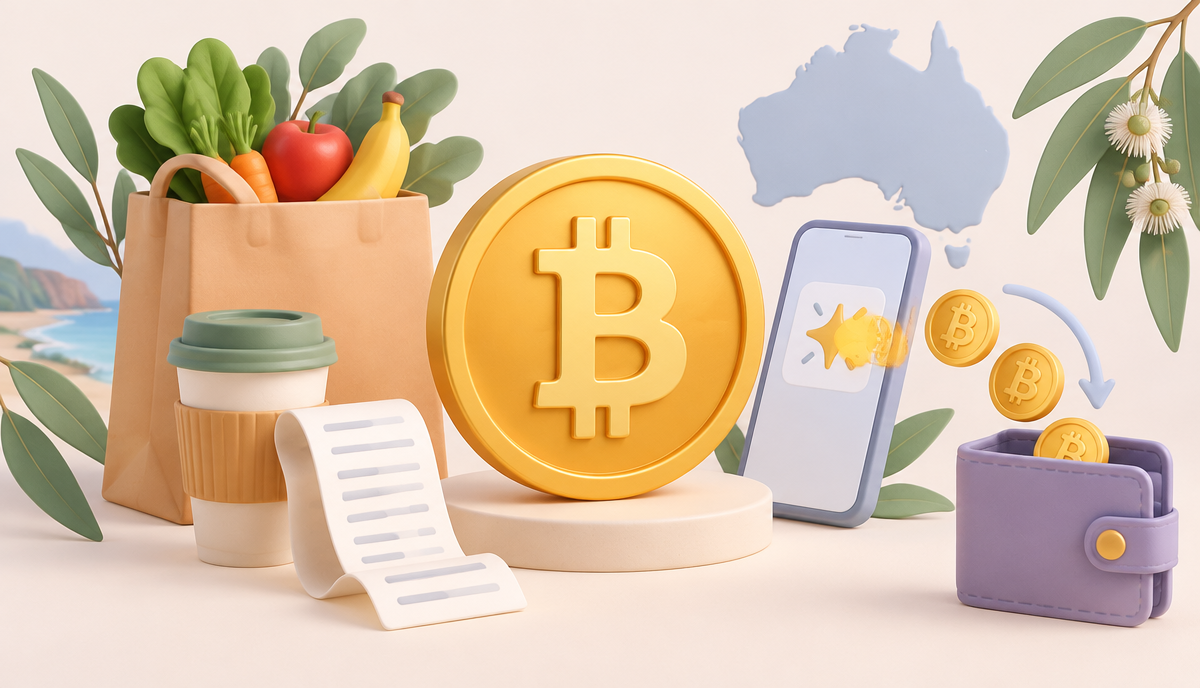
Bitcoin rewards are extra BTC (or bitcoin-denominated points) you receive for everyday activity — spending on a cashback card or app, browsing, referring friends, or using certain exchange earn programs. They are not free money: providers fund rewards from merchant fees, spreads or marketing budgets, and the AUD value of any bitcoin you receive moves with the market. In Australia the ATO generally treats crypto you receive as having tax consequences when you acquire it and again when you dispose of it. Education only — not tax advice.
Bitcoin rewards in one screen
BTC or BTC-linked
Reward form
Cards, apps, browsers
Common paths
ATO crypto rules
Tax lens
Rates change / custody
Core risk
TL;DR - Quick Takeaways
- Bitcoin rewards = BTC earned from spending, browsing, referrals or platform programs — not mining
- Aussies mainly meet cashback cards/apps, browser extensions, and exchange earn/referral offers
- Reward rates are marketing and change; never treat a screenshot rate as permanent
- Custody matters: rewards sitting on a platform are a claim on that platform until withdrawn
- ATO crypto-asset guidance is the primary tax source; keep records of dates and AUD values
- Jittie publishes learn-and-earn education for young Australians; this page does not invent card rates
- Education only — not financial, tax or legal advice
Table of Contents
What Are Bitcoin Rewards?
Bitcoin rewards are a marketing label for receiving bitcoin (or a balance denominated in bitcoin) after you do something the provider values: spend with a card, buy through an app, keep a browser extension on, or invite a friend to an exchange.
They are different from:
- Mining (proof of work hardware and electricity — see our bitcoin mining Australia guide)
- Staking on proof-of-stake networks (Bitcoin itself is not staked on the base layer — see crypto staking Australia)
- Buying bitcoin outright with AUD (see how to buy bitcoin)
If you are new to the asset itself, start with what is bitcoin. Rewards programs sit on top of that asset; they do not change how the Bitcoin network works.
Cashback Cards and Everyday Spend
Some fintech and crypto brands market cards that pay cashback in bitcoin when you spend at merchants. The economic idea is familiar from supermarket loyalty points: the program is funded from interchange, merchant deals or the provider’s marketing budget, and you receive a slice as BTC instead of supermarket points.
Practical checks before you treat any card as “free bitcoin”:
- Who holds the funds — an authorised deposit-taking institution, a prepaid program, or a crypto platform balance?
- When does the reward become yours — at purchase, after a statement cycle, or only after a vesting period?
- Can you withdraw BTC to a wallet you control, or only spend inside the app?
- What fees, foreign-transaction costs or minimums offset the headline reward?
- Are terms Australian-specific (AUD settlement, local support, clear entity name)?
Do not rely on influencer screenshots of a percentage. Providers change reward tiers, excluded merchants and caps. This page deliberately does not list or invent a cashback rate for any card, including anything associated with Jittie branding elsewhere on the site.
Cashback Apps and Reward Browsers
Beyond cards, Australians also see:
- Shopping cashback apps that pay in crypto after tracked purchases
- Browser extensions that tip a small bitcoin-denominated reward for searches or visits
- Move-to-earn style apps that pay crypto for activity (related: move-to-earn guide) — those tokens are often not bitcoin, even when marketing says “crypto rewards”
Common sense applies: read permission prompts, avoid extensions that ask for seed phrases, and treat “install to earn” funnels as high-scam territory (see our crypto scams guide). If an app only pays in a thin platform token, the AUD value can collapse even if the unit count looks large.
Exchanges, Referrals and Earn Products
Centralised exchanges sometimes pay promotional bitcoin for referrals, first trades or custodial “earn” balances. That is a platform program, not a Bitcoin-protocol feature.
- Referral bonuses are usually paid after the invitee meets KYC and trade thresholds
- Earn/yield products are typically custodial — you hold a claim on the company (see our crypto exchange Australia guide and staking guide for how earn differs from on-chain staking)
- Spreads and withdrawal fees can erase a small promotional BTC credit
AUSTRAC registration for virtual asset services is an anti-money-laundering requirement, not a stamp that a rewards promo is safe or suitable.
Tax and ATO Caution for Australians
Crypto rewards are not automatically tax-free because they feel like “points”. The Australian Taxation Office publishes guidance on crypto asset investments. Start here: ATO crypto asset investments.
In plain English, many Australians will need to think about:
- Whether a reward is ordinary income when received (AUD market value at that time)
- Whether a later sale, swap or spend of that bitcoin is a CGT event
- Keeping records: date/time received, AUD value, transaction IDs or CSV exports, and later disposal details
For a student-friendly walkthrough see our crypto tax guide for Australian students. This is general information, not tax advice — use a registered tax agent for your situation.
How Jittie Fits (Learn and Earn)
Jittie is building learn-and-earn education for young Australians: free guides, quizzes and waitlist pathways so people understand bitcoin before they touch product flows. Publisher for this education site: Eagle BTM Pty Ltd ACN 659 281 820 (AUSTRAC-registered DCE/VASP).
Honest framing:
- This guide explains the category of bitcoin rewards; it does not promise a rate
- Product features, if and when offered, belong on official product pages with current terms — not invented here
- Learning first — including stablecoins, wallets, tax and scams — reduces expensive mistakes more than chasing a temporary promo
If you already understand the basics and want an AUD on-ramp explainer, see buy bitcoin. For listed bitcoin price exposure without a wallet, see bitcoin ETF ASX.
A Simple Checklist Before You Chase Rewards
- Name the legal entity paying you and which country it is regulated in
- Separate the reward rate (marketing) from fees, FX and withdrawal costs (math)
- Know where the BTC sits — platform IOU vs wallet you control
- Log AUD value when rewards arrive for tax records
- Ignore urgency, seed-phrase requests and “guaranteed bitcoin income” ads
- Prefer learning the asset over maximising a short-lived promo
Frequently Asked Questions
What are bitcoin rewards?
Bitcoin rewards are bitcoin (or bitcoin-denominated balances) paid by a company for activity such as card spend, shopping cashback, browsing, referrals or platform promotions. They are not created by the Bitcoin protocol as a special “rewards mode”.
Can Australians earn bitcoin rewards legally?
Yes, many programs are available to Australians, but legality of using a program is not the same as tax-free or risk-free. Check the provider’s terms, identity checks and whether the business is dealing in virtual assets under Australian AML rules.
Are bitcoin rewards taxed in Australia?
Often yes in some form. The ATO’s crypto asset pages are the primary source. Rewards may be income when received and CGT may apply when you later dispose of the bitcoin. Get personal tax advice.
Is a bitcoin rewards card the same as buying bitcoin?
No. Buying bitcoin with AUD acquires BTC at a market price (plus fees). A rewards card pays a promotional amount of BTC tied to spend. You still take bitcoin’s price risk on whatever you receive.
Does Jittie offer a 5% bitcoin rewards card?
No claim like that is made on this page. This is an education guide. Any future product terms would be published separately with current disclosures — do not treat blog copy as a rate card.
What is the safest way to start?
Learn what bitcoin is, how custody works, and how Australian tax records work before chasing promotions. Start with small, understandable steps and avoid sharing seed phrases.
Related Guides

Crypto Staking Australia: 2026 Education Guide
Crypto staking in Australia explained for 2026: how proof-of-stake rewards work, liquid vs locked vs exchange earn products, ATO income vs CGT treatment, and the main risks. Education only.
What Is a Crypto Exchange in Australia? 2026 Guide
What a crypto exchange is in Australia, how AUSTRAC registration works, how AUD on-ramps work, and how a centralised exchange differs from a DEX, a Bitcoin ATM and an ASX bitcoin ETF.
Bitcoin ATMs in Australia 2026 | Jittie Guide
Find Bitcoin ATMs across Australia. Learn about KYC requirements, daily limits, fees, and how to safely use CoinFlip and other Bitcoin ATM operators.
Jittie Editorial Team
Crypto Education Specialists
Our team of crypto experts and financial educators are passionate about making cryptocurrency accessible to all Australians. With backgrounds in blockchain technology, finance, and education, we create clear, accurate guides to help you navigate the crypto world safely.