What is a Crypto Wallet? A 2026 Guide for Australians
What a wallet actually stores, how hot and cold wallets differ, what custody means on an Australian exchange, and how to avoid fake wallet apps. Education only — not financial advice.
Quick Answer
A crypto wallet is software or a device that stores the private keys that control cryptocurrency on a blockchain — it does not hold coins like a physical purse. Hot wallets stay online; cold and hardware wallets keep keys offline. Exchange accounts are usually custodial (the platform holds the keys); self-custody wallets give you the keys and a seed phrase. In Australia, AUSTRAC-registered VASPs provide custodial services under anti-money-laundering rules, which is not an AFSL. Scamwatch warns about fake wallet apps and fake support asking for seed phrases. Education only.
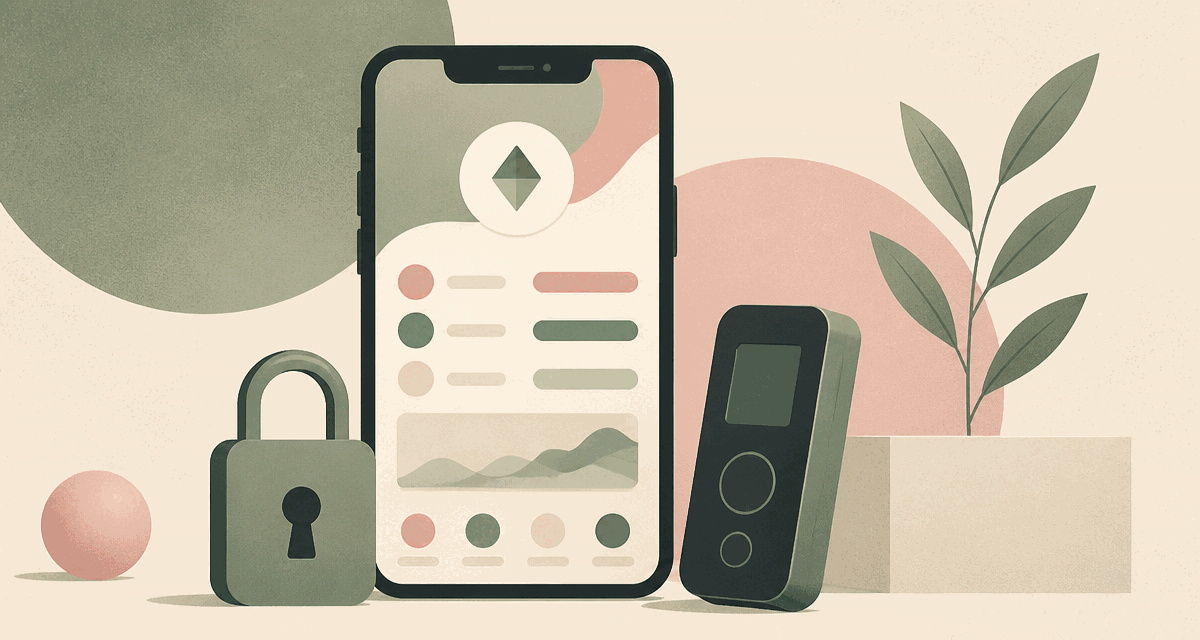
Crypto wallets in one screen
Private keys
What it stores
Online, convenient
Hot wallet
Offline keys
Cold wallet
Fake wallet apps
AU scam pattern
TL;DR - Quick Takeaways
- A crypto wallet stores the keys that control coins on a blockchain — it does not hold the coins
- Hot wallets stay connected to the internet; cold and hardware wallets keep keys offline
- Exchange accounts are usually custodial: the platform holds the keys, you hold a balance
- Self-custody wallets give you the keys and a seed phrase, with no password reset
- In Australia, businesses providing virtual asset services must register with AUSTRAC under AML rules — that is not an AFSL
- Scamwatch warns about fake wallet apps and fake support asking for a seed phrase
- Education only — not financial, tax or legal advice
Table of Contents
What is a crypto wallet?
A crypto wallet is software or a small physical device that stores the private keys used to authorise transactions on a blockchain. The name is a little misleading: the wallet does not contain coins the way a leather wallet contains notes. Balances live on the blockchain as public records, and the wallet holds the keys that let you move them.
In everyday use, that means a wallet does three things: it shows your balances, it generates receiving addresses, and it signs outgoing transactions. Everything else — swaps, staking screens, NFT galleries — is convenience built on top.
If the underlying idea of on-chain ownership is new, start with our what is Bitcoin explainer.
Hot wallets vs cold wallets
The usual split is whether the keys touch the internet. A hot wallet is connected: a phone app, a browser extension such as MetaMask, or the wallet inside an exchange app. It is quick to use and easy to set up, which also makes it the place malware and phishing sites go looking.
A cold wallet keeps keys offline. Most often that is a hardware device that signs transactions internally so the key never leaves it, though a written or stamped backup kept in a safe is also cold storage. The trade-off is handling: you are now responsible for the device, the backup and the recovery process. Our cold wallet guide goes deeper.
- Hot: convenient, good for small amounts you actually use.
- Cold: lower remote-attack surface, more setup and backup discipline.
- Many people use both, splitting spending funds from longer-term holdings.
Our crypto wallets guide and Bitcoin wallet guide compare the specific options Australians tend to look at.
Keys, custody and exchange accounts
Every wallet has a public side and a private side. The public key produces the addresses you share to receive funds. The private key authorises spending, and it is the thing that must never be shared.
When you buy crypto on an exchange and leave it there, you generally hold an account balance with that business while the business holds the keys. That is a custodial arrangement, protected by your email, password and two-factor authentication. Withdraw those coins to a wallet you control and you move to self-custody: the keys, and their seed phrase, are now entirely yours to protect.
Neither model is universally safer. Custody removes key-management risk but adds counterparty and platform risk; self-custody removes counterparty risk but makes mistakes permanent.
How a crypto wallet works
Setting up a self-custody wallet starts with a single random number. The wallet turns that number into a readable word list — the seed phrase — then derives every private key and address from it in a fixed order. This is called a hierarchical deterministic wallet: one phrase, many accounts, all reproducible on any compatible app.
To send funds, the wallet builds a transaction and signs it with the relevant private key. The signature proves the transaction is authorised without ever revealing the key. Network nodes check the signature, and once the transaction is confirmed it cannot be reversed or recalled.
A hardware wallet does that signing inside the device itself, which is why the connected computer never sees the key — only the finished signature.
How to stay safe
- Download wallet software only from links on the developer's official site — not sponsored search ads.
- Back up the seed phrase offline before sending any funds; never photograph or cloud-sync it.
- Nobody legitimate — not support, not police — will ever ask for a seed phrase.
- Send a small test amount first, and check the address on the device screen where possible.
Our crypto security best practices page covers the day-to-day habits, and the Australian crypto scams guide covers the local patterns.
Crypto wallets in Australia
Most Australians meet their first wallet as an exchange account. Businesses providing virtual asset designated services here must register with AUSTRAC and run identity checks. That registration is an anti-money-laundering and counter-terrorism-financing obligation — it is not an Australian financial services licence, and it is not a quality stamp on the platform's security or solvency.
The second local angle is fake software. Scamwatch warns about fake websites and apps that copy real wallet and exchange brands closely enough to pass a glance, then capture a seed phrase during "setup" or "restore". Related to that, Scamwatch has also flagged criminals impersonating police and digital currency exchange staff, who call about a supposed investigation and ask you to move coins to a "safe" wallet they control.
Choosing between platform custody and self-custody is a personal trade-off, and both fail in different ways. This is general information, not financial advice.
Frequently Asked Questions
What is a crypto wallet?
A crypto wallet is software or a physical device that stores the private keys used to authorise transactions on a blockchain. The wallet shows your balance and lets you send and receive, but the coins themselves live on the blockchain — the wallet only holds the keys that control them.
Does a crypto wallet actually hold my coins?
No. Unlike a physical purse, a crypto wallet does not contain the coins. Balances are records on a public blockchain. The wallet holds the private keys that prove you can move those records, which is why losing the keys, or letting someone else copy them, matters far more than losing the app itself.
What is the difference between a hot wallet and a cold wallet?
A hot wallet is connected to the internet — a phone app, browser extension or exchange app — which makes it convenient for frequent use but exposed to malware and phishing. A cold wallet keeps keys offline, usually on a hardware device or a paper backup, which reduces remote attack risk but adds handling and backup responsibility.
What is the difference between custodial and self-custody wallets?
With a custodial wallet, a business holds the private keys and you hold an account balance protected by your login and two-factor authentication. With self-custody, you hold the keys and the seed phrase, so nobody can freeze your funds and nobody can restore them for you. They fail in different ways; neither is universally safer.
How does a seed phrase relate to a crypto wallet?
A self-custody wallet generates a seed phrase — usually 12 or 24 words — when you set it up. That phrase can recreate every private key in the wallet on any compatible app or device, so it is the backup and, in practical terms, the asset. Anyone who reads it can move the funds.
Are Australian exchange wallets safer?
They are different, not automatically safer. Businesses providing virtual asset designated services in Australia must register with AUSTRAC and run identity checks, which is an anti-money-laundering obligation rather than an Australian financial services licence or a quality stamp. Platform custody removes the burden of key management but adds counterparty risk.
How do I avoid fake wallet apps in Australia?
Download wallet software only from links published on the developer official site, check the publisher name and review history in the app store, and be suspicious of sponsored search results. Scamwatch warns about fake websites and apps that copy real brands. No legitimate wallet, exchange or police officer will ever ask for your seed phrase.
Related Guides
Best Crypto Wallets Australia 2025 | Hot & Cold Wallet Guide
Compare the best crypto wallets in Australia for 2025. Reviews of hot wallets, cold storage, and hardware wallets for Australian beginners.

Bitcoin Rewards Australia: How Aussies Earn BTC in 2026
How Australians earn BTC through cashback cards, apps, browsers, referrals and exchange programs, plus custody checks, ATO tax basics and Jittie’s learn-and-earn education.

Crypto Staking Australia: 2026 Education Guide
Crypto staking in Australia explained for 2026: how proof-of-stake rewards work, liquid vs locked vs exchange earn products, ATO income vs CGT treatment, and the main risks. Education only.
Jittie Editorial Team
Crypto Education Specialists
Our team of crypto experts and financial educators are passionate about making cryptocurrency accessible to all Australians. With backgrounds in blockchain technology, finance, and education, we create clear, accurate guides to help you navigate the crypto world safely.