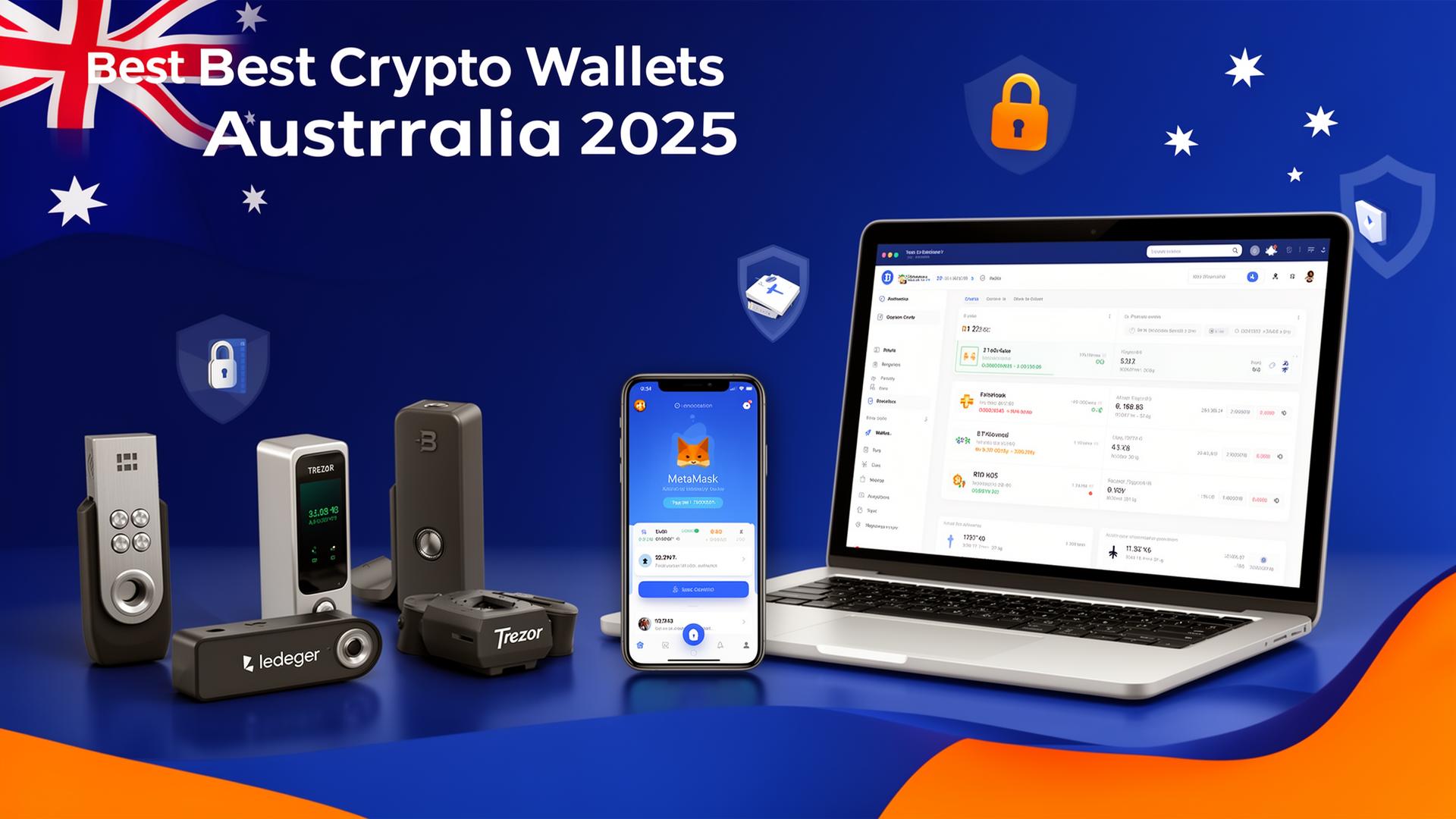
Best Crypto Wallets Australia: Complete Guide for 2025
Compare the best cryptocurrency wallets for Australian users. From free hot wallets to secure hardware cold storage - find the perfect wallet for your needs.
TL;DR - Quick Takeaways
- Hot wallets (MetaMask, Trust Wallet) are free, convenient, and best for daily trading and DeFi
- Cold wallets (Ledger, Trezor) cost $100-300 but offer maximum security for long-term holdings
- Exchange wallets (CoinSpot, Swyftx) are easiest for beginners but you don't control your keys
- For most Australians: Use a hot wallet for active trading + cold wallet for savings over $1,000
- Always back up your seed phrase offline - never store it digitally or share it with anyone
Quick Picks: Best Crypto Wallets Australia 2025
What is a Crypto Wallet?
Quick Answer
A crypto wallet stores your private keys—the secret codes that prove ownership of your cryptocurrency. For beginners, MetaMask (free) is best for DeFi; for security, use a Ledger hardware wallet (~$119 AUD).
A cryptocurrency wallet is a tool that allows you to store, send, and receive digital assets like Bitcoin, Ethereum, and other cryptocurrencies. Unlike a physical wallet that holds cash, a crypto wallet doesn't actually "store" your coins—instead, it stores the private keys that prove ownership of your crypto on the blockchain.
For Australian crypto users, choosing the right wallet is crucial for security and convenience. Whether you're buying your first Bitcoin through an Australian exchange or exploring DeFi protocols, you'll need a reliable cryptocurrency wallet Australia that suits your needs.
Why Australians Need a Crypto Wallet:
- • Self-custody: Control your own funds without relying on exchanges
- • Access DeFi: Connect to decentralised applications and earn yield
- • Security: Protect your assets from exchange hacks or closures
- • Privacy: Transact without sharing personal banking details
- • Tax records: Maintain clear transaction history for ATO reporting
What is the Difference Between Hot and Cold Wallets?
Quick Answer
Hot wallets are connected to the internet (free, convenient for trading). Cold wallets store keys offline (hardware devices, $100-300, maximum security). Use hot for trading, cold for savings over $1,000.
Wallet Security Comparison
Free
Hot Wallet Cost
$100-300
Cold Wallet Cost
$1,000+
Recommended Threshold
Understanding the difference between hot and cold wallets is essential for Australian crypto investors. Each type serves a different purpose in your overall security strategy.
Hot Wallets
Connected to the internet. Software-based (browser extension, mobile app, desktop).
✓ Free to use
✓ Instant access
✓ Easy for trading
✓ DeFi compatible
✗ More vulnerable to hacks
✗ Device-dependent
Best for: Daily trading, DeFi, small amounts
Cold Wallets
Offline storage. Hardware devices that never connect directly to the internet.
✓ Maximum security
✓ Immune to online hacks
✓ Long-term storage
✓ Physical backup
✗ Costs $100-$400
✗ Less convenient
Best for: Long-term holding, large amounts
Best Hot Wallets for Australians (2025)
These free software wallets are perfect for Australian crypto users who want easy access to their assets and DeFi applications.
1. MetaMask
Best Overall Hot Wallet
MetaMask is the most popular crypto wallet globally with over 30 million users. For Australians, it's the gateway to DeFi, NFTs, and Web3 applications. Available as a browser extension and mobile app.
Pros:
- • Free and open source
- • Supports all EVM chains
- • Built-in token swaps
- • Excellent DApp support
Cons:
- • No Bitcoin support
- • Can be confusing for beginners
- • Swap fees can be high
2. Trust Wallet
Best Mobile Wallet
Trust Wallet (owned by Binance) supports over 10 million assets across 100+ blockchains, including Bitcoin. Great for Australians who want one wallet for everything.
Pros:
- • Supports Bitcoin + altcoins
- • Built-in staking
- • NFT gallery
- • Very user-friendly
Cons:
- • Browser extension limited
- • Owned by centralised exchange
3. Coinbase Wallet
Best for Coinbase Users
Coinbase Wallet is separate from the Coinbase exchange. It's a self-custody wallet with excellent security and easy transfer between your Coinbase account.
Pros:
- • Easy Coinbase integration
- • Biometric security
- • Multi-chain support
- • Cloud backup option
Cons:
- • Cloud backup has privacy concerns
- • Limited in some regions
| Wallet | Bitcoin | Ethereum | DeFi | Mobile | Price |
|---|---|---|---|---|---|
| MetaMask | ❌ | ✅ | ✅ | ✅ | Free |
| Trust Wallet | ✅ | ✅ | ✅ | ✅ | Free |
| Coinbase Wallet | ✅ | ✅ | ✅ | ✅ | Free |
Best Cold/Hardware Wallets for Australians
Hardware wallets are physical devices that store your private keys offline. They're the gold standard for securing larger crypto holdings. Here are the best hardware wallets available in Australia.
1. Ledger Nano S Plus
Best Value Hardware Wallet
~$119 AUD
The Ledger Nano S Plus is the best cold wallet Australia for most users. It supports 5,500+ coins including Bitcoin, Ethereum, and Solana. The device connects via USB-C and works with the Ledger Live app.
Pros:
- • Excellent value for money
- • Supports 5,500+ cryptocurrencies
- • Secure element chip
- • Works with MetaMask
Cons:
- • No Bluetooth
- • Small screen
- • Ledger data breach history
Where to buy in Australia: Official Ledger.com, hardwarewallets.com.au, or Amazon Australia
2. Ledger Nano X
Best Premium Ledger
~$249 AUD
The Nano X adds Bluetooth connectivity for mobile use and a larger battery. Ideal for Australians who want to manage their crypto on-the-go with their smartphone.
Pros:
- • Bluetooth for mobile
- • Larger storage (100 apps)
- • Same security as Nano S Plus
Cons:
- • Expensive
- • Battery degradation over time
3. Trezor Model T
Best Open Source Wallet
~$289 AUD
Trezor is the original hardware wallet (since 2014). The Model T features a touchscreen and fully open-source firmware. Great for privacy-conscious Australians.
Pros:
- • Fully open source
- • Colour touchscreen
- • No data breaches
- • Shamir backup support
Cons:
- • More expensive
- • No secure element chip
- • Limited Solana support
4. Tangem Wallet
Best Card-Style Wallet
~$89 AUD
Tangem is a credit-card sized hardware wallet that connects via NFC to your phone. No batteries, no cables - just tap to sign transactions. Popular in Australia for its simplicity.
Pros:
- • Ultra-portable card format
- • No battery needed
- • Very affordable
- • 25-year lifespan
Cons:
- • No screen for verification
- • Requires smartphone
- • Limited advanced features
| Wallet | Price (AUD) | Coins | Screen | Mobile |
|---|---|---|---|---|
| Ledger Nano S Plus | $119 | 5,500+ | OLED | USB only |
| Ledger Nano X | $249 | 5,500+ | OLED | Bluetooth |
| Trezor Model T | $289 | 1,800+ | Touchscreen | USB only |
| Tangem | $89 | 6,000+ | None | NFC |
Best Exchange Wallets in Australia
Exchange wallets are the easiest option for beginners - you can buy, sell, and store crypto all in one place. However, you don't control your private keys ("not your keys, not your crypto").
CoinSpot
Australia's largest crypto exchange. AUSTRAC registered, insured, and supports 400+ coins. Perfect for beginners buying with AUD.
Learn how to buy Bitcoin on CoinSpot →Swyftx
Popular Australian exchange with low fees (0.6%), great mobile app, and demo trading feature. Good for active traders.
Independent Reserve
Institutional-grade security with insurance. Preferred by high-net-worth Australians and SMSFs.
BTC Markets
One of Australia's oldest exchanges (since 2013). Focus on major cryptocurrencies with competitive fees for large trades.
How to Choose the Right Wallet
The best crypto wallet for you depends on your experience level, how much you're investing, and what you want to do with your crypto.
Complete Beginner (First crypto purchase)
Start with an Australian exchange wallet like CoinSpot. It's the easiest way to buy crypto with AUD. Once comfortable, learn about self-custody.
Recommendation: CoinSpot → Trust Wallet
DeFi Enthusiast (Staking, swapping, NFTs)
You need a hot wallet that connects to decentralised apps. MetaMask is the industry standard for Ethereum and EVM chains.
Recommendation: MetaMask + Ledger for larger amounts
Long-term Investor (HODL strategy)
Security is paramount. Get a hardware wallet and store your seed phrase in multiple secure locations. Don't touch it.
Recommendation: Ledger Nano S Plus or Trezor
Active Trader (Daily/weekly trading)
You need quick access to funds. Use a hot wallet for trading capital and a cold wallet for profits/savings.
Recommendation: Trust Wallet + Ledger Nano X (Bluetooth)
Key Considerations for Australian Users:
- • Supported cryptocurrencies: Make sure it supports the coins you want to buy
- • Security features: 2FA, biometrics, hardware wallet compatibility
- • Ease of use: Beginners should prioritise simple interfaces
- • Australian exchange compatibility: Can you easily transfer from CoinSpot, Swyftx, etc.?
- • Tax reporting: Does it export transaction history for ATO reporting?
- • Recovery options: Standard 12/24 word seed phrase is essential
Security Tips for Australian Crypto Holders
Crypto security is 100% your responsibility. Follow these best practices to protect your digital assets.
Seed Phrase Protection
- • Write your seed phrase on paper (not digitally)
- • Store in multiple secure locations (safe, bank deposit box)
- • NEVER share with anyone - not even "support"
- • Consider metal backup plates for fire/water protection
Account Security
- • Enable 2FA on all accounts (preferably hardware key or authenticator app)
- • Use unique, strong passwords for each platform
- • Use a password manager
- • Enable biometric lock on mobile wallets
Common Scams to Avoid
- • Fake wallet apps (only download from official sources)
- • "Support" DMs asking for seed phrase
- • Phishing sites (always verify URLs)
- • "Free crypto" airdrop scams
- • Fake hardware wallets (buy from official retailers only)
Frequently Asked Questions
Is it safe to use a crypto wallet in Australia?
Yes, crypto wallets are safe when used correctly. Choose reputable wallets like MetaMask, Ledger, or Trezor. Always back up your seed phrase offline, enable 2FA where available, and never share your private keys. Hardware wallets offer the highest security for larger holdings.
Do I need a hardware wallet for small amounts of crypto?
For holdings under $500, a reputable hot wallet like MetaMask or Trust Wallet is usually sufficient. Hardware wallets ($100-300) are recommended when your portfolio exceeds $1,000 or if you plan to hold long-term. The investment provides peace of mind and protection against online threats.
Can I use international wallets in Australia?
Yes, most international crypto wallets work perfectly in Australia. MetaMask, Trust Wallet, Ledger, and Trezor all support Australian users. However, you'll need to use Australian exchanges like CoinSpot or Swyftx to convert AUD to crypto before transferring to your wallet.
How do I recover my crypto wallet if I lose access?
Your 12 or 24-word seed phrase is the only way to recover your wallet. If you have your seed phrase, you can restore your wallet on any compatible device. Without your seed phrase, your funds are permanently lost. This is why secure offline backup is critical.
What's the difference between a hot wallet and cold wallet?
Hot wallets are connected to the internet (browser extensions, mobile apps) - convenient for trading but more vulnerable to hacks. Cold wallets (hardware devices) store your keys offline, providing maximum security but less convenience. Most serious investors use both.
Which is the best crypto wallet for beginners in Australia?
For absolute beginners, an Australian exchange wallet like CoinSpot or Swyftx is easiest - you can buy, sell, and store crypto in one place. As you gain experience, MetaMask is the best free hot wallet for learning DeFi and Web3. For long-term holders, Ledger Nano S Plus offers the best value hardware wallet.
Related Guides

Crypto Scams in Australia 2026 | How to Spot & Avoid Scams
Comprehensive guide to cryptocurrency scams in Australia. Learn to identify romance scams, rug pulls, phishing attacks, and how to protect your crypto.
Best Bitcoin Wallet Australia 2025 | Hardware Guide
Compare the best Bitcoin wallets in Australia for 2025. Reviews of Lightning wallets like Wallet of Satoshi, hardware wallets, and mobile wallets.

MetaMask Wallet Guide for Australians
Step-by-step guide to setting up, securing, and using MetaMask as your everyday crypto wallet in Australia.