Bitcoin Halving Explained: Complete Guide for Australian Investors
Everything you need to know about Bitcoin halving events, historical price impacts, and what the 2024 halving means for your investment strategy in Australia.
TL;DR - Quick Takeaways
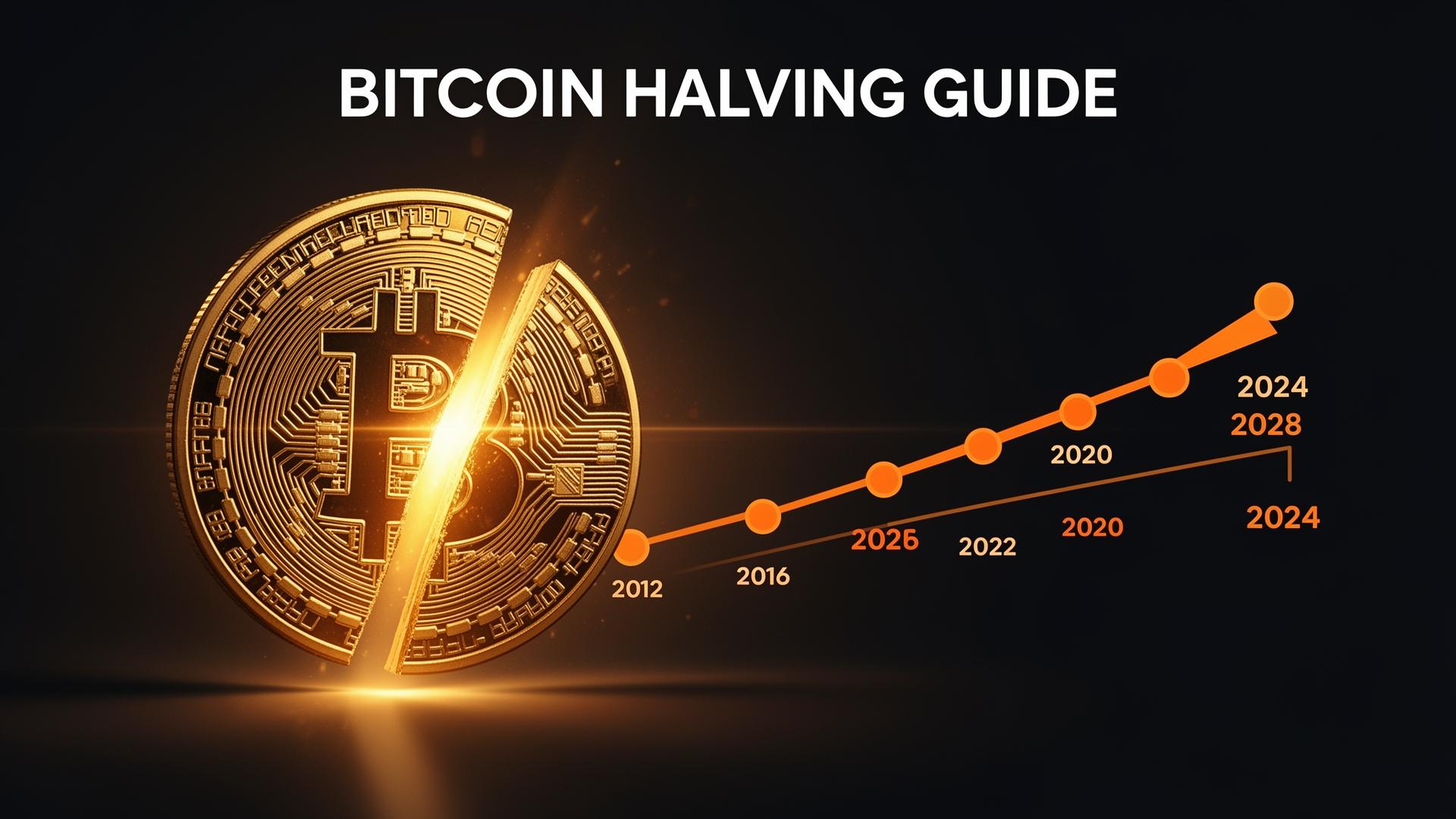
- Bitcoin halving cuts mining rewards by 50% every ~4 years (210,000 blocks)
- Four halvings completed: 2012, 2016, 2020, and April 2024 - next in ~2028
- Historically, BTC price increased 500-8,000% within 12-18 months post-halving
- 2024 halving reduced rewards from 6.25 to 3.125 BTC per block
- For Aussie investors: halvings create supply shock that historically drives prices up
Quick Answer
Bitcoin halving is a programmed event every ~4 years that cuts mining rewards by 50%. The last halving was April 20, 2024 (reducing rewards to 3.125 BTC). The next halving is expected around 2028. Historically, halvings have preceded major bull runs, with prices increasing 500-8,000% within 12-18 months.
Key Stats
4
Total Halvings
3.125 BTC
Current Block Reward
~2028
Next Halving
21M BTC
Max Supply
What You'll Learn
What is Bitcoin Halving?
Bitcoin halving is a programmed reduction in the rewards miners receive for validating transactions. Every 210,000 blocks (approximately every 4 years), the block reward is cut in half. Our how many bitcoins are there guide shows how that schedule adds up to the supply cap.
Why Does Halving Matter?
- • Controlled supply: Only 21 million Bitcoin will ever exist
- • Decreasing inflation: New BTC enters circulation at a slowing rate
- • Scarcity driver: Reduced supply with steady/increasing demand typically raises prices
- • Predictable: Unlike fiat currencies, Bitcoin's monetary policy is transparent and unchangeable
When Bitcoin launched in 2009, miners earned 50 BTC per block. After four halvings, they now earn just 3.125 BTC. This gradual reduction ensures Bitcoin remains scarce while incentivising early adoption.
Complete Bitcoin Halving History & Timeline
| Halving | Date | Block | Reward Before | Reward After | Price at Halving |
|---|---|---|---|---|---|
| 1st | Nov 28, 2012 | 210,000 | 50 BTC | 25 BTC | ~$12 USD |
| 2nd | July 9, 2016 | 420,000 | 25 BTC | 12.5 BTC | ~$650 USD |
| 3rd | May 11, 2020 | 630,000 | 12.5 BTC | 6.25 BTC | ~$8,500 USD |
| 4th | April 20, 2024 | 840,000 | 6.25 BTC | 3.125 BTC | ~$64,000 USD |
| 5th (Est.) | ~2028 | 1,050,000 | 3.125 BTC | 1.5625 BTC | TBD |
Historical Price Impact Analysis
First Halving: November 2012
Bitcoin was still relatively unknown. The halving reduced daily new supply from 7,200 BTC to 3,600 BTC. Within a year, prices exploded as early adopters accumulated.
Second Halving: July 2016
The 2017 bull run followed this halving. ICO mania, retail FOMO, and mainstream media coverage drove Bitcoin to its first major peak. Australia saw significant retail interest.
Third Halving: May 2020
Occurred during COVID-19 pandemic. Institutional adoption (Tesla, MicroStrategy, PayPal) drove this cycle. ETF anticipation and inflation fears brought mainstream legitimacy.
Fourth Halving: April 2024 (Current Cycle)
Unique cycle: First halving with spot Bitcoin ETFs approved. Institutional inflows unprecedented. Many analysts predict this cycle could see $150,000-$250,000 peak.
How Halving Affects Bitcoin Miners
When halving occurs, miners immediately earn 50% less Bitcoin for the same work. This has significant implications for the mining industry:
Immediate Challenges
- •Revenue drops 50% overnight
- •Inefficient miners become unprofitable
- •Older ASIC hardware forced offline
- •High electricity cost regions suffer most
Long-Term Adjustments
- •Network difficulty adjusts downward
- •Surviving miners gain larger share
- •Price increases historically offset revenue drop
- •Transaction fees become more important
Australian Mining Context
Australia's high electricity costs (A$0.25-0.35/kWh) make mining challenging. After the 2024 halving, only miners with solar/renewable setups or access to cheap power remain profitable. Most Australian investors find buying Bitcoin more practical than mining. See our Bitcoin Mining in Australia guide for detailed profitability analysis.
The 2024 Halving: What Happened
Key Differences in This Cycle
- Spot ETF Approval: First halving with US Bitcoin ETFs trading. Billions in institutional inflows.
- Pre-Halving Rally: Unlike previous cycles, BTC hit new all-time highs BEFORE the halving.
- Institutional Dominance: BlackRock, Fidelity, and major institutions now hold significant BTC.
- Reduced Volatility: Deeper markets mean less dramatic short-term swings.
- Mining Industry Consolidation: Public mining companies dominate; hobbyist mining nearly impossible.
What's Different for Australians
Australian investors can now access Bitcoin through ASX-listed ETFs and traditional brokers, not just crypto exchanges. This halving cycle has seen record adoption from Australian super funds and institutional investors. The ATO continues to treat Bitcoin as a CGT asset, with the 12-month discount applying to holdings.
Next Halving: 2028 Predictions
By the 2028 halving, approximately 98% of all Bitcoin will have been mined. The remaining ~2% will be mined over the next century until the final Bitcoin around 2140.
What to Expect
- Mining rewards become increasingly marginal - transaction fees will be primary miner income
- Bitcoin's inflation rate will drop below 1% (lower than gold)
- Institutional ownership likely to be even higher
- Layer 2 solutions (Lightning Network) should be mainstream
- Regulatory clarity expected globally by then
What Bitcoin Halving Means for Australian Investors
Investment Strategies Around Halvings
- 1.Dollar-Cost Averaging (DCA): Regular small purchases reduce timing risk. Most effective for long-term holders.
- 2.Pre-Halving Accumulation: Historically, buying 6-12 months before halving has been profitable.
- 3.Hold Through Cycle: Post-halving gains typically take 12-18 months to fully materialise.
- 4.Tax-Loss Harvesting: Consider selling at losses for CGT offsets during bear markets between cycles.
Australian Tax Considerations
- • Bitcoin is a CGT asset - gains are taxable when you sell, trade, or spend
- • Hold for 12+ months to qualify for 50% CGT discount
- • Halvings don't trigger tax events - only disposal does
- • Keep detailed records of purchase dates and prices
- • Consider speaking with a crypto-savvy accountant
Where to Buy Bitcoin in Australia
For Australian investors looking to accumulate Bitcoin before or after halvings:
- • Jittie: Student-friendly, low fees, instant AUD deposits
- • CoinSpot: Large selection, SMSF friendly
- • Independent Reserve: Institutional grade, best bank compatibility
- • ASX ETFs: IBTC, EBTC for traditional brokerage accounts
See our crypto-friendly banks guide to avoid deposit blocks.
Frequently Asked Questions
The Bottom Line for Australian Investors
Bitcoin halving is one of the most significant recurring events in cryptocurrency. The programmed scarcity it creates has historically preceded major bull runs. While past performance doesn't guarantee future results, understanding halving mechanics helps inform investment decisions.
For Australians, the key takeaways are: plan for long-term holding (12+ months for CGT discount), dollar-cost average to reduce timing risk, use crypto-friendly banks for deposits, and keep detailed records for tax time. The 2024 halving cycle is still unfolding - many believe the best is yet to come.
Related Guides

Bitcoin Rewards Australia: How Aussies Earn BTC in 2026
How Australians earn BTC through cashback cards, apps, browsers, referrals and exchange programs, plus custody checks, ATO tax basics and Jittie’s learn-and-earn education.

Bitcoin Mining Australia 2026 | Profitability Guide
Is Bitcoin mining profitable in Australia? Complete guide covering electricity costs, hardware, mining pools, tax implications, and whether to mine or buy BTC.
Bitcoin ETFs on the ASX: 2026 Guide for Australians
Which spot bitcoin ETFs trade on the ASX in 2026 — VBTC, QBTC, BTXX and IBIT — what they cost, how the units work, and how they compare to buying bitcoin directly.